Metske Jellema

Yn leafdefolle oantinken oan

Metske Jellema

Wy litte dy no fuortfleane.

Alletta · Riemer · Hylke & Ece

berne 15 maaie 1963ferstoarn 21 septimber 2026

De tsjinst

Sytske

Frysk

In libben fol aventoer, trochsettingsfermogen en passie foar it fleanen.

Mets groeide op op in pleats oan de Ivige Leane. De pleats wie it begjin fan in hearlike, aktyve jeugd fol Fryske tradysjes. Fan polsstokspringen yn de maitiid, simmers blikspuit boartsje om de pleats, flotten bouwe fan silo-skudden. Winters skommels meitsje oan de groubynten fan de pleats en hutten bouwe yn it strie op souder. Ek wie Metske winters net fan it iis te slaan. Heit pebeare at it iis sterk genoch wie en bûn ús de redens ûnder yn it bûthús. Sa'n dei waard altyd ôfsletten mei waarme sûkelademolke fan mem. Al betiid krige hy Fryske noaren en bliek in goeie rider, hy wûn al in reedriders wedstrijd op de legere skoalle. Hy ried as ien fan de earsten oer de Frjentsjerter Feart en De Swette. Letter at it taaiwaar wurde gong er skoske sette mei syn grutte broers.

Metske groeide op as in oanpakker, al moast it wurk wol op syn manier barre. Hânwurk lei him wat minder, mar op de trekker wie hy op syn best; as lyts jonkje bestjoerde hy al grutsk de trekker mei de pickup.

Mets socht graach de dynamyk op. Hy spile trompet yn it muzykkorps fan Skearnegoutum. It oefenjen die hy op syn sliepkeamer ta it rût út — ek siet er op fuotbal yn Skearnegoutum. Syn nocht nei frijheid en faasje fertaalde zich letter yn in Puch (brommer) mei in heech stjoer en doe at er âld genoch wie in motor, wat mem doetiids mar tige gefaarlik fûn. Dy selde motor brocht him midden yn de winter, yn syn tsjinsttiid, mear as ien kear nei Bergen-Hohne yn Dútslân.

Hoewol't it VWO yn Snits en de HTS yn Ljouwert him prima ôfgiene, wie it theoretyske diel fan de HTS net syn grutte hobby. Doe't syn einskripsje lizze bliuwde en mem him nei 2 jier nei de caravan ferbande, waard it tiid foar in oare koers. Mets wist wol wat hy woe: de loft yn. Hy woe piloot wurde.

Syn dream krige troch besunigings by de KLM in ûnferwachte wending, hy wie yn principe oannommen, mar troch besunigingen op piloten wie hy net nedich. Mar Mets liet zich net út it fjild slaan. Mei in liening fan mem ferhúze hy nei Amerika om yn Virginia syn piloten opleiding te folgjen. It wie it begjin fan in perioade fan bikkeljen en oerlibjen. Nei syn earste spannende solo-ynstrumintflecht fan Newport nei Elizabeth City, folge in tiid fan flean oeren meitsjen. Mets reizige de eastlike steaten fan Amearika lâns en frege by elk fleanfjild ôf se wurk foar him hiene, hy út fan húze by medestudenten. It wie der wis net fetpot, mar syn discipline wie izersterk. Hy libbe ekstreem súnig mei mar ien helder doel foar eagen: syn mem sa gau mooglik werom betelje.

Syn hurde wurk waard beleanne mei de sprong nei de Learjet yn Marianna, Florida. It wie in tropenbaan: Mets fleach mei organen, sike minsken, popgroepen en ek as doelwyt fan it Amerikaanske leger boppe de Golf. Hy stie 24 oere per dei, 7 dagen yn 'e wike paraat. Noait frij! It levere him djip respekt op fan my. Sels bin ik ien kear mei him mei flein nei Key West yn de Learjet, in ûnderfining om noait wer te ferjitten. Yn Amearika boude hy ek weardefolle en libbenslange freonskippen op mei minsken lykas Jose Cortez en Jim. Mei José fleach hy de Cessna, sa fertelde hy dat hy bûten it fleantug hongen hie om it lâningsgestel, dat net nei ûnderen woe, wer yn beweging te krijen.

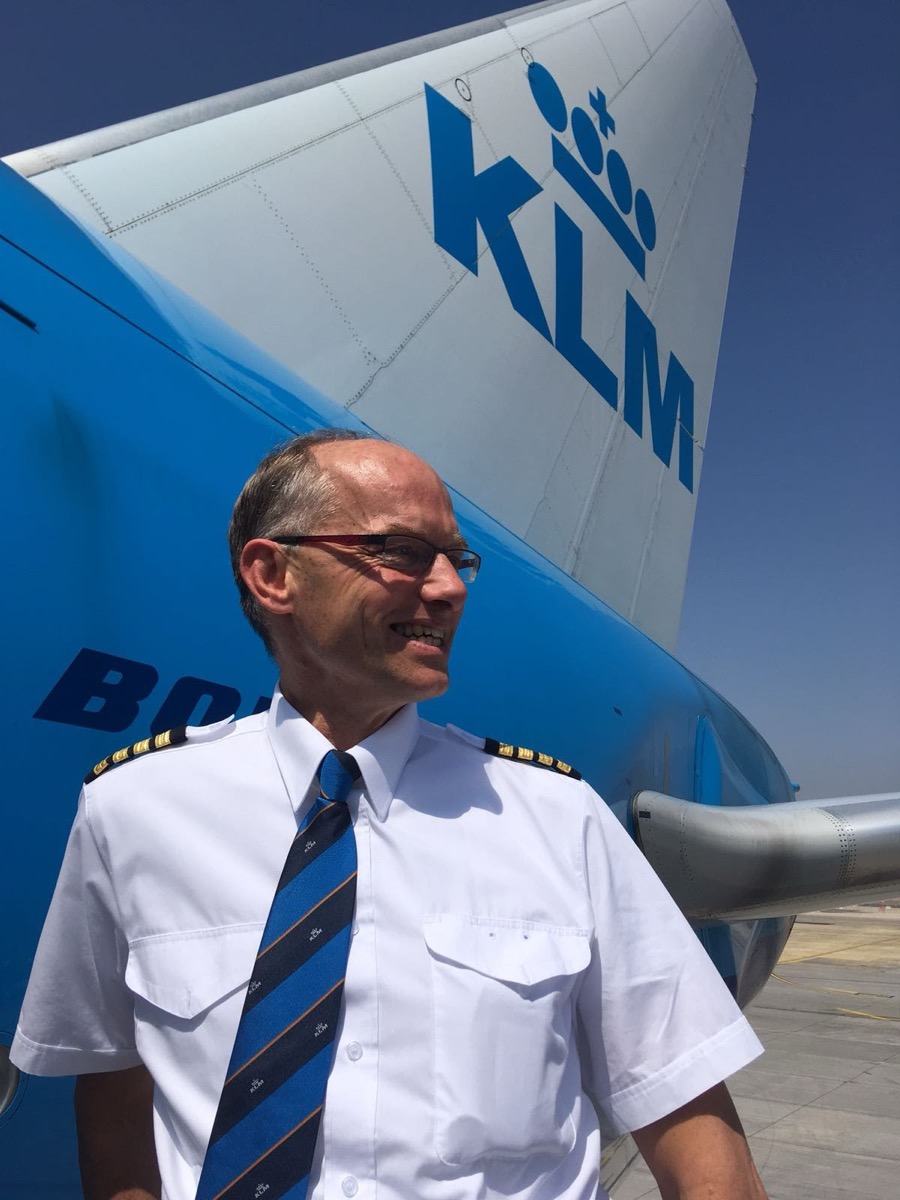
Yn 1994 gong Mets werom nei Nederlân om syn type-rating foar de grutte loftfeart te beheljen. De ultieme kroan folge al gau: hy waard oannommen by de KLM. Mem hat dit gelokkich noch krekt meimakke foar har ferstjerren yn 1995. Wat wie se bliid en grutsk en wat stie Mets dêr, fol grutskens, syn nije uniform te showen yn de keamer.

Mets bleau in man fan útersten en in trochsetter. Dat bliek wol doe at de Alvestêdetocht fan 1997 troch gong. Ynpland as 'co-co' op in KLM-flucht nei Los Angeles, is hy nei oankomst der, dalik werom flein nei Nederlân. Hat in pear oerkes sliept en gie dernei de Alvestedentocht fan 230 kilometer riden. Hy is fuort dernei wer yn it fleantúch stapt werom nei LA om op tiid te wêzen foar syn weromflucht nei Nederlân as co-co. Unfoarstelber en typysk Mets.

Syn jeugd hold net op by tweintig. Hy bleau ek letter ûndogens en boartlik. Bygelyks: wetterskiee efter de trekker op de opfeart.

Mets liet sjen dat je mei trochsettingsfermogen, in nuchtere blik en passie jo dromen wier meitsje kinne. Wy ûnthâlde him as in famyljeman, in piloat yn hert en nieren en in man dy't altyd de hoarizon op sykjen bliuwde.

Rêst sêft, Mets.

English

A life full of adventure, perseverance, and a passion for flying.

Mets grew up on a farm on the Ivige Leane. The farm was the start of a wonderful, active youth filled with Frisian traditions. From pole-vaulting over ditches in spring, playing kick-the-can around the farm in summer, to building rafts out of silo boards. In winter, making swings attached to the thick wooden beams of the barn and building forts in the attic straw. Metske couldn't be kept off the ice in winter, either. Dad checked if the ice was strong enough and strapped on our skates in the barn. A day like that was always wrapped up with warm hot chocolate made by Mom. Early on, he got Frisian speed skates and proved to be a good skater; he even won an ice-skating race in primary school. He was one of the first to skate across the Frjentsjerter Feart and De Swette. Later, when thaw set in, he went ice-block jumping with his older brothers.

Metske grew up as a go-getter, though work always had to be done his way. Manual labor wasn't really his thing, but on the tractor he was in his element; even as a little boy, he proudly drove the tractor with the pickup attached.

Mets loved action. He played trumpet in the brass band of Scharnegoutum. He practiced in his bedroom until the windows rattled — and he also played football in Scharnegoutum. His hunger for freedom and speed later translated into a Puch moped with high handlebars, and when he was old enough, a motorcycle, which Mom thought was extremely dangerous back then. That same motorcycle took him to Bergen-Hohne in Germany more than once in the middle of winter during his military service.

Although VWO in Sneek and HTS in Leeuwarden went smoothly enough for him, the theoretical side of HTS wasn't really his passion. When his final thesis sat untouched and Mom banished him to the caravan after two years, it was time to change course. Mets knew what he wanted: to take to the skies. He wanted to become a pilot.

His dream took an unexpected turn due to cutbacks at KLM; he had essentially been accepted, but pilot cutbacks meant he wasn't needed. But Mets didn't let that knock him down. With a loan from Mom, he moved to America to complete his pilot training in Virginia. It was the start of a tough period of grinding and survival. After his first nerve-wracking solo instrument flight from Newport to Elizabeth City, there followed a period of building up flight hours. Mets traveled across the eastern US states, asking every airport if they had work for him, staying with fellow students. Money was definitely tight, but his discipline was ironclad. He lived extremely frugally with just one clear goal in mind: to pay his mother back as quickly as possible.

His hard work paid off with a leap to the Learjet in Marianna, Florida. It was a high-pressure job: Mets flew donor organs, sick patients, pop bands, and even served as a target for the US military over the Gulf. He was on call 24 hours a day, 7 days a week. Never a day off! It earned him my deep respect. I flew with him once to Key West in the Learjet myself — an experience I will never forget. In America, he also built valuable, lifelong friendships with people like José Cortez and Jim. He flew a Cessna with José, and he once told how he had hung out of the plane to get the landing gear unstuck when it refused to come down.

In 1994, Mets returned to the Netherlands to earn his type rating for commercial aviation. The ultimate crown soon followed: he was hired by KLM. Luckily, Mom was able to witness this just before her passing in 1995. How happy and proud she was, and there stood Mets, beaming with pride, showing off his new uniform in the living room.

Mets remained a man of extremes and a persistent fighter. That was proven when the 1997 Eleven Cities Tour took place. Scheduled as a relief co-pilot on a KLM flight to Los Angeles, he landed there and immediately flew right back to the Netherlands. He slept for a couple of hours and then skated the 230-kilometer Eleven Cities Tour. Immediately afterward, he boarded a plane back to LA to be on time for his return flight to the Netherlands as co-pilot. Unbelievable, and typical Mets.

His youth didn't stop at twenty. He remained mischievous and playful later in life too. For example: waterskiing behind a tractor on the canal.

Mets showed that with perseverance, a down-to-earth mindset, and passion, you can make your dreams come true. We remember him as a family man, a pilot through and through, and a man who was always searching the horizon.

Rest softly, Mets.
De Kast · Hert fan myn gefoel

Frysk

De kontoeren yn it lân bin feroare troch de tiid
It is dizich oer it fjild en ik wit my sels gjin ried
Yn it doalhôf fan emoasjes giet de tiid oan my foarby
Ik rin oer d 'âlde paeden wêr't ik eartiids rûn mei dy

De hynders yn it fjild, de moune op 'e dyk
Se binne der net mear, it is net mear gelyk
Ik sjoch wer âlde bylden, maar noosto der net mear bist
Is der in grutte leechte, ik fiel in grut gemis

It liket krekt dat 'k dy wer heare kin
It liket krekt dat 'k yn 't ferline bin

Yn it hert fan myn gefoel sil ik dy nea ferjite
Yn it hert fan myn gefoel bisto by my
Ik tink werom en ik woe dat ik mei dy laitsje koe
Fanôf de earste dei

De wurden út dyn brief stean yn myn holle skreaun
Ik doarmje troch de jierren, neat haw ik ferdreaun
't Is as de wyn my wjukken jout, my oan dy tinken docht
Dan sjoch ik nei de loft, tusken de wolken wurd it ljocht

It liket krekt dat 'k dy wer heare kin
It liket krekt dat 'k yn 't ferline bin

Yn it hert fan myn gefoel sil ik dy nea ferjite
Yn it hert fan myn gefoel bisto by my
Ik tink werom en ik woe dat ik mei dy laitsje koe
Fanôf de earste dei

Soe ik myn fertriet nei de himel roppe wolle
Om dy werom te krijen is nea my te folle

Yn it hert fan myn gefoel sil ik dy nea ferjite
Yn it hert fan myn gefoel bisto by my
Ik tink werom en ik woe dat ik mei dy laitsje koe
Fanôf de earste dei

English

The contours of the land have changed with time
Mist hangs over the fields, and I don't know where to turn
In the maze of emotions, time passes me by
I walk the old paths where I once walked with you

The horses in the field, the windmill on the dyke
They are no longer there; nothing is the same
I see familiar scenes again, but now that you are gone
There is a great emptiness; I miss you so much

It feels as though I can hear you again
It feels as though I am back in the past

In the heart of all I feel, I will never forget you
In the heart of all I feel, you are with me
I look back and wish that I could laugh with you
From the very first day

The words from your letter are etched in my mind
I wander through the years; I have pushed nothing away
It is as though the wind gives me wings and brings you to mind
Then I look up at the sky; light breaks through the clouds

It feels as though I can hear you again
It feels as though I am back in the past

In the heart of all I feel, I will never forget you
In the heart of all I feel, you are with me
I look back and wish that I could laugh with you
From the very first day

If I were to cry out my sorrow to the heavens
There is nothing I would not do to bring you back

In the heart of all I feel, I will never forget you
In the heart of all I feel, you are with me
I look back and wish that I could laugh with you
From the very first day

Jelle

Frysk

Metske fielde him tige besibbe mei de pleats en it lânskip hwer't hy hikke en tein wie. Sa wie it ek by de bekinde Fryske dichter Willem Abma, dy't twa jier tobek forstoarn is. Hy wie ien fan de tsien fan Pake Jelle Ruurds Abma en Beppe Doutjse Bouma út Folsgeare. Us Mem wie de âldste, Omke Willem de jongste. Omke hat prachtige gedichten skreaun wêrûnder de sammelbondel “It eigen lânskip”. Yn dizze bondel stiet it gedicht: “Kijophelje”. Dat lêz ik no foar.

Kijophelje

foarhinne as ik de kij ophelle
moarnsier om in oere of fjouwer
heardest noch de stilte
in fiere rop fan in buorman-boer
by 't Heech om
it hoastjen fan in hokling heardest
mar seachst it net fanwege de damp
dy't boppe de sleatten hong
tichteby heardest it sachte ploffen
fan de stront fan de ko dy't efterbleau
dy guodlik oanseach en mar wjerkôge
en do joechst him in sacht klapke
op 'e kûnt mei de bleate hân
want in ko sloechst net in ko wie in freon
molke en brea de ieuwen troch
do heardest kikkerts kwêkjen en de rop
fan skries en ljip en op 'e jister
spetest yn geve amers dat it brûze
tuolle en spantou dyn attributen
en stadich waard de wrâld wekker
hark it harjen fan in seine
it ambyld fan de smid yn it doarp
in strikel yn in amer 'tju tjujút tjút.'
wrâld jou dy stilte werom dy't lûden
werkenne lit en beneame sa't se binne
ik wol op kilometers ôfstân in hiem hearre
ljurk en tsjirk fleanen sjen beharkje kinne

English

Metske felt deeply connected to the farm and the landscape where he was born and raised. It was the same for the well-known Frisian poet Willem Abma, who passed away two years ago. Uncle Willem was one of ten children of Grandpa Jelle Ruurds Abma and Grandma Doutsje Bouma from Folsgeare. Our Mother was the oldest, Uncle the youngest. Uncle wrote beautiful poems, including the collection Through One's Own Landscape. In this collection is the poem: "Fetching the Cows". I will now read it aloud.

Fetching the Cows

In the past, when I fetched the cows
early in the morning around four o'clock
you could still hear the silence
a distant call from a neighbor farmer
around Heeg
you heard the coughing of a yearling heifer
but you couldn't see it because of the mist
that hung over the ditches
close by you heard the soft plopping
of the dung from the cow lagging behind
who looked at you good-naturedly and just kept chewing
the cud and you gave her a gentle pat
on the rump with your bare hand
because you didn't hit a cow, a cow was a friend
milk and bread through the centuries
you heard frogs croaking and the call
of godwit and lapwing,
and on the milking field you squirted into sturdy buckets
until it foamed milking stool and leg-rope your tools
and slowly the world woke up listen,
the peening of a scythe
the anvil of the blacksmith in the village
a whetstone in a bucket 'tju tjujút tjút.'
world, give back that silence that lets sounds
be recognized and named as they are I want to hear
a farmyard miles away be able to see and listen
to lark and redshank flying

Wybren

English

Dear family and friends,

My name is Wybren. Metske and I have known each other since kindergarten here in Scharnegoutum. During our teenage years, we became close friends. Together with Jan-Hendrik Kroes, we had an incredible amount of fun during those years. We were sporty and spent a lot of time swimming, windsurfing, and playing volleyball. Metske was strong, always enthusiastic and determined. He had to be, otherwise you do not complete the Eleven Cities Skating Tour three times.

On Saturday nights we went to discos, and on Sundays we played Risk at Metske's house. Towards the end of December, the old milk churns would come down from the attic and we would go carbide shooting. Right here, in front of this church. Whenever a police car approached, we would dive into the bushes, while the officers had already seen us long before and would friendly wave in the direction of the bushes.

Metske moved to America to become a pilot. We thought that was quite an adventure. During the following summer vacation, I went to visit him in Orange County, far out in the countryside. Metske lived in a converted barn on a farmer's property. Goodness me. But he was flying, and he was happy.

Although it had not been the plan at all, he also taught me to fly during that vacation. Within two weeks he let me fly solo. Was that really responsible? Well, we were twenty-two…

From that moment on, we shared a fascination with flying, and especially over the last fifteen years we made a great many wonderful flights together.

One of the highlights for me was our week in Texas nearly two years ago. We were guests at the impressively large farm of Klaas Tolsma. We were amazed by the cattle and the robotic milking system.During that week, Metske, Riemer and I flew a small airplane through the southern states of America. Being able to experience that together remains very special to me.

Earlier, Metske and Riemer had also been to Texas, with a very special passenger in the cockpit for the Jellema family: Annie Terpstra from Sneek. She had once been a great support to Metske's father when he was chronically ill. Metske thought it was wonderful that he could fly her to visit her son in America as a token of appreciation for everything she had meant to him.

Metske and I did so many things together. It was always an adventure, but above all it was familiar and comfortable. We knew what we could expect from each other and shared many interests. We often told one another what a privilege it was to be able to do all of this together.

As I tell these stories, it almost sounds like something out of an adventure novel. With a childhood dream that came true for Metske: he became a pilot for KLM.But that beautiful story came to an end far too soon.

Five years ago, Metske was told that he had a rare form of cancer. After a major operation and months of recovery, he returned to the controls of the Boeing aircrafts and continued flying right up to his retirement. But the disease slowly gained ground and proved fatal last week. Until the very end, he remained interested in life and positive. Truly admirable.

The past period has been difficult not only for Metske, but also for those closest to him. Alletta, Hylke and Riemer, so much was placed on your shoulders.

Know that Metske was incredibly proud of you. Proud of Alletta, who cared for him with great devotion. Metske sometimes said that he preferred not to know everything about his illness. But Alletta was different. She searched everywhere for information and left no stone unturned.

He was also proud of Hylke and Riemer. He spoke enthusiastically about you and had complete confidence in you. Over the past years, he watched you grow into mature men who are finding their own path in life, a good path.

I too will truly miss him. But the memories of everything we experienced together will remain. And for that, I am deeply grateful to him.